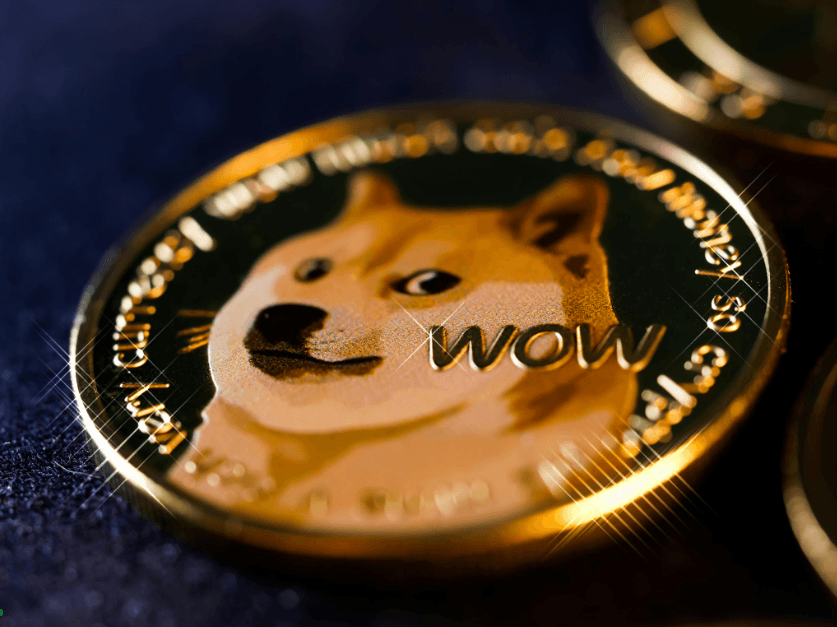
Dogecoin is one of the most well-known cryptocurrencies. Its brand is larger than its codebase, its cultural reach is broader than its technical roadmap, and its visibility tends to be broader than its real contribution to the digital asset economy. It is precisely this disproportion that makes Dogecoin so interesting. It is neither a failed project nor irrelevant. Nevertheless, it exists amid a stress that is increasingly difficult to ignore as crypto matures: the narrative of Dogecoin remains more powerful than the framework supporting it.
The gap is important since crypto is no longer evaluated solely on the basis of attention. Investors, exchanges, institutions, and even casual users now want to know what a network can actually support in the long term. There, curiosity about terms such as doge usd and doge inr is more than just an interest in price. It answers a larger question: whether Dogecoin will be able to continue to translate brand power into market relevance as the rest of crypto gets more technologically advanced and operationally business-like.
Dogecoin Won the Internet Before It Won the Infrastructure Race
The identity has been the strongest point of Dogecoin. It is known, amusing, catchy, and comprehensible even to individuals who are almost ignorant of crypto. Such recognition is not so common. Dogecoin has never been complicated or abstract, and it has always been straightforward and direct in a market where technical language and abstract storytelling are the order of the day.
But simplicity may conceal a structural fault. Dogecoin rose to cultural prominence quicker than it attained technical distinction. Its community, meme status and celebrity associations provided it with a reach most projects could only dream of. But the infrastructure behind that eminence has frequently been less advanced than the size of its brand would otherwise imply.
The issue at this point is strategic. A strong brand may attract traders, headlines, and market attention. It alone cannot create payment networks, strong developer ecosystems, or next-generation financial products. That is why visibility is not a long-term challenge for Dogecoin. It is a conversion. Is it possible to transform attention into long-term utility, more fundamental infrastructure, and an enhanced presence in the crypto stack?
The Market Still Treats Dogecoin Like a Major Asset
The fact that the market still regards Dogecoin as a significant crypto asset is one reason this issue is so important. It is very liquid, very visible, and is extensively monitored on significant platforms. In that reality, Binance plays a significant role. Dogecoin is not a marginal token on the edge of obscurity on Binance. It is positioned before an international clientele that regards it as a trading tool, a cultural standard, and a recurring element of market cycles.
Such exchange support gives Dogecoin a level of relevance that most technically stronger projects never attain. Binance helps keep Dogecoin in circulation, strengthening its liquidity, availability, and presence. It also provides DOGE with a sort of practical legitimacy, since assets held on Binance still enjoy the benefits of global distribution and 24/7 market coverage.
However, this is where tension is further stretched. Exchange visibility can maintain relevance, yet not the infrastructure question. Dogecoin has the potential to remain trending on Binance and continue to face a more profound sense of uncertainty about its role beyond trading and cultural familiarity.
Brand Strength Cannot Replace Technical Direction Forever
Crypto is entering a more challenging phase. Markets are rewarding more and more assets with the potential to reach payment infrastructure, tokenized finance, ETF products, custody models, and institution-wide stories. That transformation redefines the criterion of what is considered durable relevance. There is no longer a token that lives on its recognition. It requires either good infrastructure or a persuasive direction towards it.
Another type of momentum has been frequently applied to Dogecoin. Its brand has an emotive power. It enjoys internet-native affection and its weird power to become familiar across generations. Technical direction is not branding, however. A network that desires to live beyond a meme-like trading vehicle needs to demonstrate how it fits into the next iteration of digital finance.
For example, Dogecoin can do that, but it is challenging. A good brand has the power to purchase time, but not all time. The market, in due course, raises questions about the infrastructure story. What systems are constructed around the asset? What types of applications or payment rails can it support? How does it work when crypto becomes even more institutional and less improvisational?
The Risk Is Becoming a Perpetual Proxy
A potential future for Dogecoin is that it will continue to play a role, but primarily as a proxy. A surrogate of retail sentiment, a meme culture, Elon Musk speculation, internet-native risk appetite, and the capability of crypto to transform attention into price. It is nothing. Actually, this is one of the reasons that have rendered Dogecoin so robust.
But that has its limits. A proxy asset may be a tradable, well-known asset that nevertheless does not become structurally significant. It is the essence of the technology issue. The brand of Dogecoin is so strong that it continues to attract the market to a larger infrastructure future for the asset. But the network has not necessarily lived up to those expectations.
This is the reason why the same unanswered question is brought back to light with each cycle. Is Dogecoin merely culturally immortal, or is it becoming something more functional? Binance continues to ask that question by maintaining DOGE’s market centrality. Centrality and capability are not equal.
Recognition Is Not the Same as Readiness
The greatest strength of Dogecoin is that almost everyone in the crypto sphere knows what it is. Its greatest flaw is that the market has yet to fully understand what it is about. The uncertainty can be tolerated in an attention-seeking market, but it becomes more critical as crypto builds a more robust institutional and technological level.
Moreover, the problem, however, is not that Dogecoin doesn’t have to be a brand. The answer is that the brand is ahead of the infrastructure. DOGE can be relevant in the long run due to its binance, liquidity, and consistent market exposure. However, to be more than a long-lasting meme with sellable staying power, Dogecoin will require a clearer technological argument on its side.
It is the true question at the heart of Dogecoin’s future. Its brand has already taken over the internet. The bigger challenge now is to create sufficient infrastructure that will make sense of how big that brand has grown.