A well-chosen mirror can do more than reflect a room back at itself. In contemporary interiors, mirrors help shape light, soften harsh edges, and make tight layouts feel more generous than their floor plan suggests. That is one reason they remain so central to design in Dubai, where apartments and villas often balance clean architectural lines with a strong preference for brightness and visual openness. The most successful mirror choices are usually the ones that solve a room problem while also contributing character.
Why arch shapes feel different from standard mirrors
Shape changes how a mirror behaves inside a room. Rectangular mirrors tend to reinforce structure and symmetry, while curved tops interrupt that rigidity and make the composition feel less mechanical. HomeKode’s mirror-design guide points directly to this effect, noting that arch forms help break up the rigid lines of modern furniture and add a softer, more organic presence. The point is not only decorative. In rooms with hard corners, stone finishes, straight shelving, and low-contrast palettes, the arch can keep the space from looking too severe.
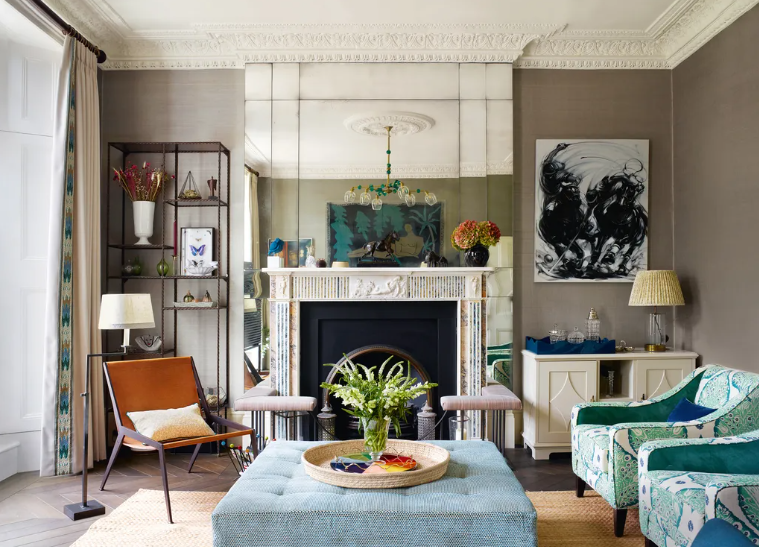
Architectural Digest has long treated mirrors as a tool for opening rooms visually, especially where reflected light can make walls appear farther away than they really are. That broader principle helps explain the appeal of curved mirrors. They still widen and brighten a space, but they do so with a profile that reads as gentler and more architectural than a plain flat rectangle. For many living rooms, hallways, and bedroom corners, that difference is enough to turn a mirror from a practical afterthought into a defining design decision.
Where an arched mirror works best in the home
Placement matters as much as shape. HomeKode’s arch collection describes these mirrors as especially effective in hallways, living rooms, bedrooms, and large spaces that benefit from added dimension and reflected light. That aligns with broader design logic. An arched mirror near an entry can create a more graceful first impression. In a bedroom, it can introduce height without the heaviness of a fully framed rectangular piece. In a living area, it can act as a sculptural vertical accent instead of reading like a purely functional object.
This is where the arch mirror fits naturally into a design scheme. The arch does not need to dominate a room to improve it. Often its best role is to relieve visual tension by adding a curved form among straighter lines, harder textures, and more angular furniture.
How mirrors affect scale, light, and room perception
HomeKode’s design guide and Architectural Digest converge on the same basic truth: mirrors widen perception by bouncing light and extending sight lines. Architectural Digest notes that mirrors can make a room feel brighter and wider than it actually is, especially when placed to redirect natural light. HomeKode adds the local design dimension, emphasizing how mirrors can enhance natural light, increase perceived ceiling height, and introduce architectural interest.
An arch shape amplifies those benefits in a slightly different way from a standard wall mirror. Because the top line curves, the mirror introduces visual lift. That does not literally raise the ceiling, but it changes where the eye travels. In interior design, that shift matters. Rooms often feel better before they look larger. The mirror succeeds when it makes a space feel more balanced, more open, and less abrupt.
See also: Luxury Home Additions in Utah County – How to Expand Without Compromising Your Home’s Quality
Why arch mirrors keep showing up in modern interiors
They are versatile without being bland. House Beautiful’s mirror guide notes that a well-chosen mirror can add character, create a focal point, and make a room appear bigger and brighter. Arch mirrors do all three while remaining compatible with both traditional and contemporary interiors. That adaptability explains their continued popularity. They can suit metal frames, wood finishes, window-style designs, or minimalist black borders without losing their core visual effect.
In Dubai interiors especially, where strong finishes and polished surfaces are common, an arched profile can also keep a room from feeling over-engineered. It contributes softness without sacrificing clarity.
Why an arch mirror is often the smarter design choice
An arch mirror works best when a room needs more than reflection. It helps redistribute light, soften rigid architecture, and add a sense of height without obvious visual clutter. That combination is what makes it more than a trend piece. It is a practical design solution with a shape that still feels distinctive.