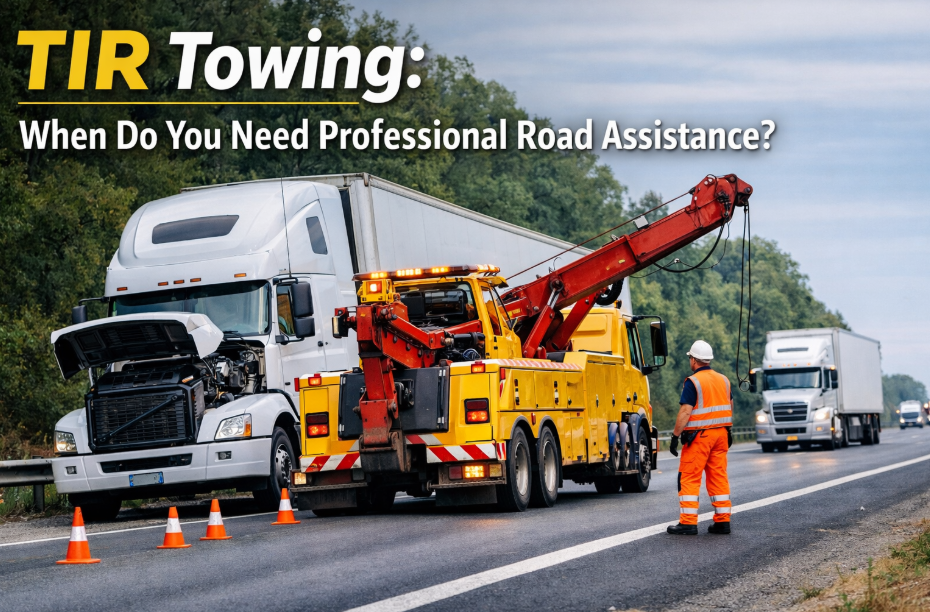
For transport companies, owner-operators, and fleet managers, every hour on the road matters. A delayed truck can disrupt delivery schedules, increase operating costs, and create pressure across the entire supply chain. That is why knowing when to call for professional holowanie TIR is not just a practical issue, but a business decision. Heavy vehicle breakdowns rarely happen at a convenient time, and trying to solve them without expert support can quickly make a difficult situation worse.
Why TIR breakdowns require a different kind of support
A passenger car problem and a truck failure are two very different situations. A TIR vehicle is larger, heavier, and far more complex in terms of systems, cargo responsibility, and roadside safety. When a truck stops unexpectedly, the issue may involve brakes, tires, electrical systems, suspension, steering, engine components, or the trailer itself. In many cases, the size of the vehicle alone makes the problem impossible to handle without specialist equipment.
Professional road assistance for heavy vehicles is designed for these exact challenges. It is not only about towing a truck from one point to another. It is also about securing the vehicle, protecting the cargo, managing roadside risk, and restoring movement as quickly as possible. Skilled technicians know how to assess the situation fast and choose the safest method of support.
Drivers often feel pressure to keep going, especially when deadlines are tight. Still, ignoring a serious mechanical issue or relying on temporary fixes can lead to a more expensive breakdown later. In some cases, it may also create a danger for the driver and everyone else on the road.
The most common situations that call for professional help
There are many reasons why a truck may need immediate road assistance. Some problems look minor at first, but become serious once the vehicle is fully loaded or traveling at speed.
Here are some of the most common situations where outside support becomes necessary:
- Engine failure that prevents the vehicle from starting or continuing safely
- Brake system issues that reduce stopping power
- Tire blowouts on the truck or trailer
- Battery or electrical failures
- Gearbox or clutch malfunction
- Overheating during long-distance driving
- Suspension or axle damage
- Problems after a collision or roadside incident
- Trailer connection faults
- Vehicle stuck in mud, snow, or a roadside ditch
In any of these cases, a professional response is the safest choice. Heavy transport vehicles cannot be treated like ordinary cars. The methods, tools, and knowledge required are much more advanced.
Warning signs you should not ignore
Not every truck issue begins with a complete stop. Sometimes the vehicle gives clear signals that something is wrong before the problem becomes critical. Experienced drivers usually recognize these signs, but even then, it is important not to underestimate them.
Watch out for symptoms such as:
- Unusual noises from the engine or drivetrain
- Difficulty changing gears
- Reduced power while climbing or accelerating
- Strong vibrations in the steering wheel or cabin
- Smoke from under the hood or near the wheels
- Sudden warning lights on the dashboard
- Air pressure irregularities
- Pulling to one side while driving
- Unusual trailer movement
When one or more of these symptoms appear, calling for help early can prevent a much bigger disruption. It may also reduce repair costs, because early intervention often stops minor faults from becoming severe mechanical damage.
Accidents are not the only reason trucks need towing
Many people associate truck towing with road collisions, but that is only part of the picture. In practice, a large share of towing calls involve technical failures rather than crashes. Modern trucks are advanced machines, but that also means there are more systems that can fail under pressure.
Long routes, changing weather, overloaded schedules, poor road conditions, and mechanical wear all increase the chance of a roadside incident. Even well-maintained vehicles can suffer sudden faults. A damaged alternator, failed turbocharger, broken belt, or air system leak can bring a full route to an abrupt stop.
This is exactly why transport businesses benefit from having a trusted assistance provider in mind before trouble starts. Waiting until a breakdown happens can lead to rushed decisions, higher prices, and longer downtime.
See also: The Importance of Joining a Professional Online Quran Academy
What professional road assistance actually includes
Many drivers assume roadside support only means towing the truck to a workshop. In reality, the service is often much broader. A reliable provider first evaluates whether the vehicle can be repaired on site. If the issue can be fixed safely at the roadside, that is usually the fastest and most economical option.
Mid-route support may include battery assistance, wheel service, minor mechanical repairs, diagnostics, fuel delivery, air system help, and recovery from difficult terrain. When the truck cannot continue, professional Pomoc Drogowa TIR becomes essential for transporting the vehicle safely to a garage, depot, or other secure location.
This level of service matters because every situation is different. A fully loaded truck on a motorway shoulder presents different risks than an empty trailer on a local road. Professional teams know how to adapt to each case without causing further damage to the vehicle or cargo.
The value of fast response time
Speed matters in heavy transport support, but not only because of convenience. A stopped truck can create a traffic hazard, especially on busy roads, in poor visibility, or during bad weather. Delayed assistance increases the chance of secondary accidents and puts more pressure on the driver.
Fast response also helps limit business losses. Late deliveries can affect customer relationships, warehouse schedules, and future contracts. For fleet operators, one immobilized vehicle may create a chain reaction across several planned routes.
This is why professional assistance providers focus on both availability and logistics. The best services understand how important location, access, and route conditions are. Reaching the truck quickly is only the first step. The next step is resolving the problem efficiently and safely.
Why equipment and experience matter so much
Not every towing company is equipped to handle large commercial vehicles. TIR towing requires specialized recovery trucks, lifting systems, safety tools, and trained operators who understand the structure of heavy goods vehicles. Using the wrong equipment can damage the chassis, axles, trailer connection points, or cargo area.
Experience is just as important as machinery. A professional team can judge:
- Whether roadside repair is possible
- How to secure a loaded trailer
- What towing method is safest
- How to protect the cargo during movement
- Which route is suitable for moving a damaged heavy vehicle
- When additional support vehicles are needed
These decisions are not minor details. They affect cost, time, legal compliance, and road safety. Choosing an unqualified service can turn one breakdown into several expensive problems.
How professional assistance helps protect cargo and deadlines
For transport businesses, the vehicle is only one part of the problem. The cargo often matters just as much, sometimes more. Delays can lead to penalties, spoilage, contract issues, or dissatisfied clients. Sensitive goods, refrigerated loads, and high-value shipments need careful handling if a truck becomes immobilized.
Professional assistance reduces these risks by working with the bigger picture in mind. It is not only about getting the truck off the road. It is about keeping the shipment secure, minimizing downtime, and helping the business return to normal operations as soon as possible.
For that reason, many companies build long-term relationships with trusted roadside support providers. They know that in transport, preparation saves money. Having a reliable contact before a crisis happens is often the smartest move.
When waiting too long becomes the costly mistake
One of the biggest mistakes drivers and operators make is delaying the call for help. Sometimes this happens because they hope the issue will disappear. Sometimes they want to avoid towing costs. In reality, hesitation often leads to greater expense.
A truck that continues driving with a serious fault can suffer:
- More severe engine damage
- Brake failure
- Tire destruction
- Trailer instability
- Damage to cargo
- Total route interruption
- Higher repair bills
- Greater legal and safety risks
Calling early does not always mean the vehicle will be towed. In many situations, professional teams can diagnose the problem and solve it at the scene. Even when towing is required, early action usually means a faster, safer, and more controlled solution.
Choosing the right support partner for heavy vehicles
Not all providers offer the same level of service. If you operate trucks regularly, it is worth checking a few key details before selecting a partner. The right company should understand commercial transport and be prepared for demanding roadside conditions.
Look for these qualities:
- Experience with heavy goods vehicles
- Availability across key transport routes
- Proper towing and recovery equipment
- Clear communication
- Fast dispatch and realistic response times
- Ability to assist both truck and trailer
- Strong local knowledge
- Transparent service approach
A dependable assistance partner gives drivers confidence. It also gives managers peace of mind, because they know support is available when problems arise without warning.
The smarter way to stay moving
Professional road assistance is not just for dramatic breakdowns or major crashes. It is a practical safeguard for any transport operation that wants to reduce risk, control downtime, and protect both vehicles and cargo. Heavy trucks work under pressure every day, and even a small fault can quickly become a serious disruption.
Knowing when to call for help is part of running transport professionally. If the truck shows warning signs, loses performance, becomes unsafe, or stops completely, expert support should be the first move, not the last resort. Quick action protects the driver, the vehicle, the shipment, and the schedule.
In heavy transport, staying prepared is often what makes the difference between a manageable delay and a costly crisis.